Mastering Music Vocabulary

in the Classroom

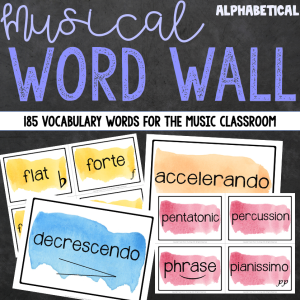
Integrating music vocabulary effectively into your classroom can be both a creative and critical part of music education. The Watercolor Vocab Cards offer a dynamic and visually engaging way to bring music terminology to life. Here are six detailed strategies to utilize these versatile cards in your music lessons:

1. Create an Interactive Word Wall

Transform a section of your classroom into a colorful word wall with Watercolor Vocab Cards. Arrange the cards by categories such as dynamics, tempo, or instruments. Use this wall as an interactive teaching tool during lessons, encouraging students to reference the terms as they learn new concepts.

2. Enhance Listening Exercises

Incorporate vocab cards during listening activities. For instance, when students listen to a piece, they can identify terms related to the music’s dynamics, texture, or rhythm. This method helps students apply abstract terms to real musical examples, deepening their understanding and retention of musical vocabulary.

3. Facilitate Composition Workshops

Encourage creativity by using vocab cards in composition sessions. Assign each student or group a set of cards and challenge them to compose a piece that incorporates the elements described. This approach not only reinforces the vocabulary but also encourages practical application through composition and performance.

4. Interactive Solfege Manipulatives

Turn solfege cards into a hands-on activity by allowing students to manipulate them to create melodies. This color-coded system helps students understand pitch relationships and scales visually and aurally. Combine this with a digital or physical keyboard to enhance kinesthetic learning.

5. Vocabulary Games and Quizzes

Use the vocab cards to play games like “Musical Jeopardy” where students answer questions based on definitions or, conversely, define terms based on descriptions or demonstrations. These activities serve as both a teaching tool and a method to assess students’ knowledge in a fun, low-pressure setting.

6. Build Collaborative Learning Criteria

Engage students in creating success criteria for projects or performances using the vocab cards. This collaborative process helps students understand expectations and assessment standards, and gives them a voice in their educational journey. It also ensures that they comprehend and can utilize the terms in practical, meaningful ways.

These teaching strategies, supported by Watercolor Vocab Cards, will not only make learning more interactive and enjoyable but will also help students internalize musical vocabulary effectively. Whether you’re teaching basic music theory or advanced performance skills, these cards are an invaluable tool for enhancing understanding and engagement in music education.

Explore Our Full Range of Teaching Resources

For more innovative teaching tools like the Watercolor Vocab Cards, visit Teach from The Stage’s online shop. You’ll find a variety of resources designed to enrich your teaching and your students’ learning experiences.

Picture of Alessandra

Alessandra

My name is Alessandra and I am a Kindergarten-Grade 8 Teacher of the Arts, specializing in music and dance education. Based in Toronto, Canada, I teach 800+ students a week and am a huge advocate for the arts. I graduated with a Bachelors of Music Therapy & Masters of Education, and I am passionate about fostering a quality music education program for every learner.